Starten Sie mit einer konkreten Zeichnung.
Beschreiben Sie, was Sie brauchen, und verfeinern Sie die Zeichnung im Chat.
Drei Schritte. Kein Zeichenprogramm nötig.
- 01
Beschreiben Sie, was Sie brauchen
Geben Sie Ihren Wunsch ein oder laden Sie ein Foto oder PDF hoch.
- 02
Prüfen Sie die Zeichnung
Ihre Beschreibung wird an das passende Modul weitergeleitet.
- 03
Verfeinern und exportieren
Bitten Sie um Änderungen, behalten Sie die Versionen und exportieren Sie das Ergebnis.
Häufige Fragen
What NSGC notation does this pedigree maker follow?
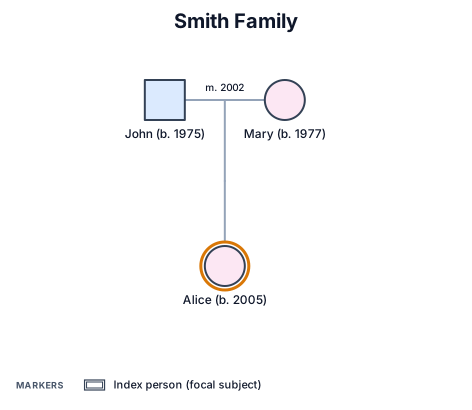
The tool follows NSGC Pedigree Standardization Task Force (Bennett 2008) conventions: squares for males, circles for females, filled symbols for affected individuals, half-filled for carriers, and a proband arrow for the index case. These are the clinical standards used in genetic counseling worldwide.
Can I create a BRCA1 hereditary cancer pedigree?
Yes. Describe the family history — which relatives had breast or ovarian cancer, known BRCA1 carrier status, ages at diagnosis, and deceased family members — and the AI generates a four-generation pedigree with all NSGC notations applied.
How are carrier females shown in the pedigree?
Carrier females are shown as circles with a center dot, per NSGC convention for X-linked recessive conditions like hemophilia A. For autosomal recessive carriers, a half-filled circle is used.
Is this tool useful for genetics students?
Yes. Genetics and nursing students use pedigree charts extensively for coursework and USMLE prep. You can describe any Mendelian inheritance pattern — autosomal dominant, autosomal recessive, X-linked recessive — and receive a correctly drawn pedigree with the inheritance pattern visible.
Can I export the pedigree for a clinical report?
Yes. Export as SVG or PNG for inclusion in clinical reports, genetic counseling session notes, or academic assignments.
Does the tool handle consanguinity?
Yes. You can describe cousin marriages or other consanguineous relationships and the AI will draw the double line between partners that indicates consanguinity in NSGC notation.
Was möchten Sie diese Woche als Diagramm darstellen?
Eine Schaltung, einen Ablauf, ein System. Beschreiben Sie es im Editor und wählen Sie die nächste Änderung.
Editor öffnen