Genogram examples.
Same tool, four requests. Every drawing below is a real render.
Rather start from a finished drawing? Browse 61 genogram templates →
What a genogram is.
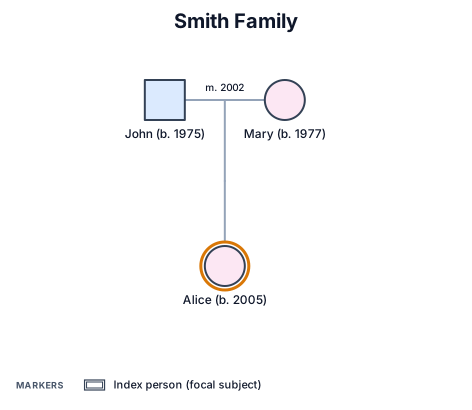
A genogram is a family diagram that records relationships across generations. It can show partnership and parent-child structure as well as clinical details such as conditions, deaths, and relationship dynamics.
Unlike a basic family tree, a genogram is used to notice patterns that may matter in care or assessment. Keep the drawing focused on information that is relevant to the question being explored.
- Standard
- McGoldrick, Gerson & Petry (2020)
- Also follows
- GenoPro emotional taxonomy
- Engine
- schematex-genogram
- Editable
- Double-click text, drag nodes
- Export
- SVG · PNG · PDF
Who uses genograms.
Show a condition across generations and identify the person whose history is being assessed.
Document a blended family structure and relationships relevant to a family assessment.
Map family structure and substance-use history as context for an adult client.
How to make a genogram in three steps.
Describe it
One paragraph is enough to start.
See the drawing
Drawn by the right engine.
Say what changes
Every edit keeps a version.
Common questions
What is a genogram?
A genogram is a multi-generation family diagram that can include relationships, health conditions, life events, and emotional dynamics.
How is a genogram different from a family tree?
A family tree mainly shows lineage. A genogram can add clinical, relational, and contextual information that supports assessment.
Can a genogram show health conditions?
Yes. Conditions can be attached to individual family members so patterns across generations are easier to review.
What information should I include?
Include only what serves the purpose of the assessment: names or labels, relationships, generations, relevant health history, and significant family dynamics.
Other drawings for the same work.
Map the family history that matters.
Free account, no card. Start with the people, relationships, and history you need to understand.
Open the editor